Buy sportsincanada.com ?
We are moving the project
sportsincanada.com .
Are you interested in purchasing the domain
sportsincanada.com ?
domain@kv-gmbh.de · 0541-91531010
Buy sportsincanada.com ?
How can sinusoidal oscillations be modeled?
Sinusoidal oscillations can be modeled using mathematical equations that describe the amplitude, frequency, and phase of the oscillation. The most common way to model sinusoidal oscillations is through a sine or cosine function, such as y = A*sin(2πft + φ), where A is the amplitude, f is the frequency, t is the time, and φ is the phase shift. By adjusting these parameters, we can accurately represent the behavior of sinusoidal oscillations in various systems and phenomena. Additionally, sinusoidal oscillations can also be modeled using differential equations in the context of dynamic systems analysis. **
What is an expanded sinusoidal function?
An expanded sinusoidal function is a function of the form y = A*sin(Bx + C) + D, where A, B, C, and D are constants. This type of function represents a sinusoidal wave that has been expanded or compressed vertically or horizontally, and shifted vertically or horizontally. The constant A represents the amplitude, B represents the frequency, C represents the phase shift, and D represents the vertical shift. By adjusting these constants, the shape, position, and size of the sinusoidal wave can be modified. **

Similar search terms for Sinusoidal
Top-Angebote
Products related to Sinusoidal:
-
Friendly Fresh Finds Antifreeze Mask For Winter Cycling, Skiing And Running Cold Weather Gear Antifreeze Mask For Winter Cycling, Skiing And Running Cold Weather GearStay Warm and Protected with the Ultimate Winter Cycling Antifreeze Mask When the temperatures drop, don't let the cold weather stop you from enjoying your favorite outdoor activities. The Winter Cycling Antifreeze Mask is designed to keep you warm...27,97 $*Shipping: 0,00 $Secure redirect to the provider
-
Perfect Picks Market GTUBIKE Winter Cycling Mask Thermal Face Cover For Skiing, Running & Outdoor Sports GTUBIKE Winter Cycling Mask Thermal Face Cover For Skiing, Running & Outdoor SportsCold air, harsh wind, and freezing rides shouldnt stop your adventure. This winter cycling mask is designed to keep your face, ears, and neck comfortably warm during outdoor activities in cold weather. Made for cyclists, skiers, runners, and...31,97 $*Shipping: 0,00 $Secure redirect to the provider
-
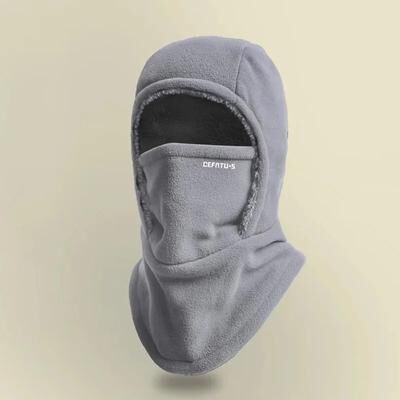
Inspired Living Thermal Windproof Balaclava Mask For Cycling, Skiing & Motorcycle Riding grayCold winds shouldnt stop your adventure. This winter balaclava mask is designed for riders, skiers, and outdoor enthusiasts who demand warmth without bulk. Made with soft fleece lining and a snug fullface fit, it shields you from biting wind while...26,97 $*Shipping: 0,00 $Secure redirect to the provider
-
Perfect Picks Market Windproof Winter Cycling Mask For Motorcycle, Skiing & Hiking Warm, Breathable Face Shield Unisex Windproof Winter Cycling Mask For Motorcycle, Skiing & Hiking Warm, Breathable Face Shield UnisexStay warm and protected this winter with our windproof winter cycling mask. Designed for outdoor enthusiasts, this mask offers exceptional comfort and breathability, making it perfect for a variety of activities such as cycling, skiing, and hiking....29,97 $*Shipping: 0,00 $Secure redirect to the provider



-
How is a sinusoidal alternating voltage generated?
A sinusoidal alternating voltage is generated by an alternating current passing through a coil of wire in an electrical generator. As the current flows back and forth, it induces a changing magnetic field in the coil, which in turn generates a voltage. This voltage produced is sinusoidal in nature, meaning it varies smoothly and continuously over time, creating the characteristic wave pattern associated with alternating current. **
-
Can someone explain sinusoidal functions to me?
Sinusoidal functions are mathematical functions that represent the behavior of a sine or cosine wave. These functions can be used to model periodic phenomena such as sound waves, light waves, and mechanical vibrations. The general form of a sinusoidal function is y = A sin(Bx + C) + D or y = A cos(Bx + C) + D, where A represents the amplitude, B represents the frequency, C represents the phase shift, and D represents the vertical shift. Sinusoidal functions are characterized by their periodic nature, with the wave repeating itself at regular intervals. They are widely used in fields such as physics, engineering, and signal processing to analyze and predict the behavior of periodic phenomena. **
-
What is the sinusoidal representation of angular velocity?
The sinusoidal representation of angular velocity is given by the equation ω(t) = ω₀sin(ωt + φ), where ω₀ is the amplitude of the angular velocity, ω is the angular frequency, t is the time, and φ is the phase angle. This representation describes how the angular velocity of an object changes sinusoidally with time. It is commonly used in physics and engineering to analyze and model periodic motion. **
-
Can you please ping in a sinusoidal pattern?
Yes, I can ping in a sinusoidal pattern by sending a series of pings at regular intervals that follow a sinusoidal waveform. This can be achieved by adjusting the timing and frequency of the pings to create the desired sinusoidal pattern. This type of pattern can be useful for testing and analyzing the behavior of systems that respond to periodic inputs. **

How can one model with general sinusoidal functions?
One can model with general sinusoidal functions by using the form y = A sin(Bx + C) + D or y = A cos(Bx + C) + D, where A represents the amplitude, B represents the frequency, C represents the phase shift, and D represents the vertical shift. By adjusting these parameters, one can create a sinusoidal function that fits a given set of data or represents a particular phenomenon. Additionally, one can use trigonometric identities to manipulate and simplify the general sinusoidal functions to better fit the specific modeling needs. **
How does the amplitude of a sinusoidal function change?
The amplitude of a sinusoidal function determines the maximum distance the function varies from its midline. It is the distance from the midline to the peak (or trough) of the function. The amplitude remains constant for a given sinusoidal function and does not change unless explicitly modified in the function's equation. A larger amplitude results in a greater variation in the function's values, while a smaller amplitude results in a more compressed wave. **
Top-Angebote
Products related to Sinusoidal:
-
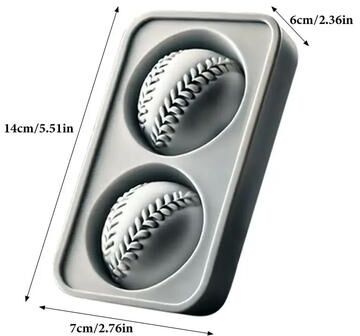
Inspired Living Hockey & Baseball Silicone Ice Mold Set For Cocktails Hockey Puck Ice Mold + Baseball Ice Cube Tray 4 GridsMake every sip feel like an occasion. This hockey puck ice mold and baseball set creates bold, slowmelting ice shapes that instantly upgrade whiskey, iced coffee, or party drinks. Designed for sports fans, home bartenders, and hosts who love...54,97 $*Shipping: 0,00 $Secure redirect to the provider
-
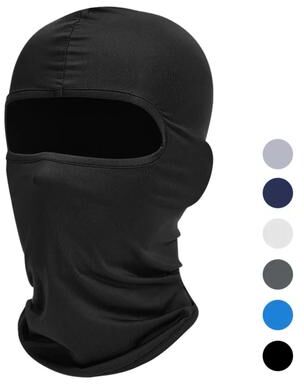
The Handy Homestead Breathable Full Face Balaclava Mask For Cycling Hiking Skiing And Airsoft Breathable Full Face Balaclava Mask For Cycling Hiking Skiing And AirsoftStay covered, cool, and comfortable wherever the trail takes you. This breathable balaclava is a lightweight full face mask designed for cyclists, hikers, campers, hunters, riders, and airsoft players who need flexible protection without bulky gear....29,97 $*Shipping: 0,00 $Secure redirect to the provider
-
Friendly Fresh Finds Antifreeze Mask For Winter Cycling, Skiing And Running Cold Weather Gear Antifreeze Mask For Winter Cycling, Skiing And Running Cold Weather GearStay Warm and Protected with the Ultimate Winter Cycling Antifreeze Mask When the temperatures drop, don't let the cold weather stop you from enjoying your favorite outdoor activities. The Winter Cycling Antifreeze Mask is designed to keep you warm...27,97 $*Shipping: 0,00 $Secure redirect to the provider
-
Perfect Picks Market GTUBIKE Winter Cycling Mask Thermal Face Cover For Skiing, Running & Outdoor Sports GTUBIKE Winter Cycling Mask Thermal Face Cover For Skiing, Running & Outdoor SportsCold air, harsh wind, and freezing rides shouldnt stop your adventure. This winter cycling mask is designed to keep your face, ears, and neck comfortably warm during outdoor activities in cold weather. Made for cyclists, skiers, runners, and...31,97 $*Shipping: 0,00 $Secure redirect to the provider
-
How can sinusoidal oscillations be modeled?
Sinusoidal oscillations can be modeled using mathematical equations that describe the amplitude, frequency, and phase of the oscillation. The most common way to model sinusoidal oscillations is through a sine or cosine function, such as y = A*sin(2πft + φ), where A is the amplitude, f is the frequency, t is the time, and φ is the phase shift. By adjusting these parameters, we can accurately represent the behavior of sinusoidal oscillations in various systems and phenomena. Additionally, sinusoidal oscillations can also be modeled using differential equations in the context of dynamic systems analysis. **
-
What is an expanded sinusoidal function?
An expanded sinusoidal function is a function of the form y = A*sin(Bx + C) + D, where A, B, C, and D are constants. This type of function represents a sinusoidal wave that has been expanded or compressed vertically or horizontally, and shifted vertically or horizontally. The constant A represents the amplitude, B represents the frequency, C represents the phase shift, and D represents the vertical shift. By adjusting these constants, the shape, position, and size of the sinusoidal wave can be modified. **
-
How is a sinusoidal alternating voltage generated?
A sinusoidal alternating voltage is generated by an alternating current passing through a coil of wire in an electrical generator. As the current flows back and forth, it induces a changing magnetic field in the coil, which in turn generates a voltage. This voltage produced is sinusoidal in nature, meaning it varies smoothly and continuously over time, creating the characteristic wave pattern associated with alternating current. **
-
Can someone explain sinusoidal functions to me?
Sinusoidal functions are mathematical functions that represent the behavior of a sine or cosine wave. These functions can be used to model periodic phenomena such as sound waves, light waves, and mechanical vibrations. The general form of a sinusoidal function is y = A sin(Bx + C) + D or y = A cos(Bx + C) + D, where A represents the amplitude, B represents the frequency, C represents the phase shift, and D represents the vertical shift. Sinusoidal functions are characterized by their periodic nature, with the wave repeating itself at regular intervals. They are widely used in fields such as physics, engineering, and signal processing to analyze and predict the behavior of periodic phenomena. **
Similar search terms for Sinusoidal
-
Inspired Living Thermal Windproof Balaclava Mask For Cycling, Skiing & Motorcycle Riding grayCold winds shouldnt stop your adventure. This winter balaclava mask is designed for riders, skiers, and outdoor enthusiasts who demand warmth without bulk. Made with soft fleece lining and a snug fullface fit, it shields you from biting wind while...26,97 $*Shipping: 0,00 $Secure redirect to the provider
-
Perfect Picks Market Windproof Winter Cycling Mask For Motorcycle, Skiing & Hiking Warm, Breathable Face Shield Unisex Windproof Winter Cycling Mask For Motorcycle, Skiing & Hiking Warm, Breathable Face Shield UnisexStay warm and protected this winter with our windproof winter cycling mask. Designed for outdoor enthusiasts, this mask offers exceptional comfort and breathability, making it perfect for a variety of activities such as cycling, skiing, and hiking....29,97 $*Shipping: 0,00 $Secure redirect to the provider
-
USA Free Shipping Shop Windproof Winter Face Mask Thermal Ski Mask For Cycling, Skiing & Cold Weather Protection Windproof Winter Face Mask Thermal Ski Mask For Cycling, Skiing & Cold Weather ProtectionStay warm and comfortable no matter how harsh the weather gets with this Winter face mask designed for outdoor adventures and daily commutes. Built for cyclists, skiers, runners, hikers, and anyone who spends time outdoors, it provides reliable...37,97 $*Shipping: 0,00 $Secure redirect to the provider
-
Inspired Living Hockey & Baseball Silicone Ice Mold Set For Cocktails Hockey Puck Ice Mold + Baseball Ice Cube Tray 2 GridsMake every sip feel like an occasion. This hockey puck ice mold and baseball set creates bold, slowmelting ice shapes that instantly upgrade whiskey, iced coffee, or party drinks. Designed for sports fans, home bartenders, and hosts who love...54,97 $*Shipping: 0,00 $Secure redirect to the provider
-
What is the sinusoidal representation of angular velocity?
The sinusoidal representation of angular velocity is given by the equation ω(t) = ω₀sin(ωt + φ), where ω₀ is the amplitude of the angular velocity, ω is the angular frequency, t is the time, and φ is the phase angle. This representation describes how the angular velocity of an object changes sinusoidally with time. It is commonly used in physics and engineering to analyze and model periodic motion. **
-
Can you please ping in a sinusoidal pattern?
Yes, I can ping in a sinusoidal pattern by sending a series of pings at regular intervals that follow a sinusoidal waveform. This can be achieved by adjusting the timing and frequency of the pings to create the desired sinusoidal pattern. This type of pattern can be useful for testing and analyzing the behavior of systems that respond to periodic inputs. **
-
How can one model with general sinusoidal functions?
One can model with general sinusoidal functions by using the form y = A sin(Bx + C) + D or y = A cos(Bx + C) + D, where A represents the amplitude, B represents the frequency, C represents the phase shift, and D represents the vertical shift. By adjusting these parameters, one can create a sinusoidal function that fits a given set of data or represents a particular phenomenon. Additionally, one can use trigonometric identities to manipulate and simplify the general sinusoidal functions to better fit the specific modeling needs. **
-
How does the amplitude of a sinusoidal function change?
The amplitude of a sinusoidal function determines the maximum distance the function varies from its midline. It is the distance from the midline to the peak (or trough) of the function. The amplitude remains constant for a given sinusoidal function and does not change unless explicitly modified in the function's equation. A larger amplitude results in a greater variation in the function's values, while a smaller amplitude results in a more compressed wave. **
* All prices are inclusive of VAT and, if applicable, plus shipping costs. The offer information is based on the details provided by the respective shop and is updated through automated processes. Real-time updates do not occur, so deviations can occur in individual cases. ** Note: Parts of this content were created by AI.