Buy sportsincanada.com ?
We are moving the project
sportsincanada.com .
Are you interested in purchasing the domain
sportsincanada.com ?
domain@kv-gmbh.de · 0541-91531010
Buy sportsincanada.com ?
What did Poggio steal?
Poggio Bracciolini, an Italian scholar and scribe, is known for stealing a manuscript containing the only surviving copy of Lucretius' "De rerum natura" (On the Nature of Things) from a German monastery in the 15th century. This act of theft was significant because it led to the rediscovery and subsequent dissemination of this important work of ancient Roman poetry and philosophy, which had been lost for centuries. Poggio's theft played a crucial role in preserving and transmitting the ideas of Lucretius to future generations. **
What is the name of this mobile phone song Ai di di di di di di dai? I think it's a Russian song.
The song you are referring to is "Ai, Ai, Ai" by the Russian artist Polina Gagarina. It is a popular Russian pop song that gained international recognition. The catchy melody and upbeat rhythm have made it a favorite for mobile phone ringtones and music downloads. If you enjoy this song, you may also like other hits by Polina Gagarina. **
Similar search terms for Il-Vigneto-di-Poggio
Top-Angebote
Products related to Il-Vigneto-di-Poggio:
-
"""Castello di Monsanto""" """Castello di Monsanto Chianti Classico Il Poggio Riserva 1980 Red Wine - Italy""""""Sourced directly from the winery's cellar. Spring was very short in 1980 and flowering was delayed. The summer was characterized by fluctuating temperatures and a long period of dry weather. The harvest was delayed until the last week of October..."342,99 $*Shipping: 0,00 $Secure redirect to the provider
-
"""Castello di Monsanto""" """Castello di Monsanto Il Poggio Chianti Classico Gran Selezione 2020 Red Wine - Italy""""""#45 Wine Spectator Top 100 of 2025#1 Vinous Top 100 of 2025From the Chianti Classico Riserva Docg, Tuscany Region in Italy, this Chianti Classico is made from Hand picked grapes selected at the optimum moment of the vintage. Fermentation takes..."93,99 $*Shipping: 0,00 $Secure redirect to the provider
-
"""Poggio di Sotto""" """Poggio di Sotto Rosso di Montalcino 2022 Red Wine - Italy""""""From a vintage marked by heat tempered by summer rainfall that softened the impact of high temperatures, the harvest took place earlier than usual between September 2 and 16, preserving the rich and expressive character of the vineyards, and the..."122,99 $*Shipping: 0,00 $Secure redirect to the provider
-
"""Poggio di Sotto""" """Poggio di Sotto Brunello di Montalcino 2018 Red Wine - Italy""""""Parallels to the red wines of Burgundy abound in discussions of Poggio di Sotto. The Sangiovese wines released from this special property do always favor elegance and restraint over opulence and power, yet they never lack depth. Normally a paler..."299,99 $*Shipping: 0,00 $Secure redirect to the provider


-
Is swimming allowed in Lago di Braies?
Yes, swimming is allowed in Lago di Braies. The lake is popular for swimming during the summer months, with clear and refreshing waters. However, visitors should be aware that the water can be quite cold due to its alpine location. It is important to check for any specific rules or regulations regarding swimming at the lake before visiting. **
-
What is the difference between il faut que and il faut?
"Il faut" is used to express a general necessity or obligation, while "il faut que" is used to introduce a specific action or event that is necessary or required. For example, "il faut manger" means "it is necessary to eat" in a general sense, while "il faut que tu manges" means "you need to eat" in a specific sense. "Il faut" is used to make a general statement about what is necessary, while "il faut que" is used to specify what needs to be done. **
-
When do you use il faut and il ne faut pas?
"Il faut" is used to express what is necessary or required, while "il ne faut pas" is used to express what is not allowed or should be avoided. For example, you would use "il faut" to say "il faut étudier pour réussir" (it is necessary to study to succeed), and "il ne faut pas" to say "il ne faut pas fumer dans ce lieu" (smoking is not allowed in this place). These expressions are used to give advice, make recommendations, or set rules. **
-
Why is it souhaite-t-il and not souhaite-s-il?
In French, the pronoun "il" (he) is combined with the verb "souhaiter" (to wish) to form the phrase "souhaite-t-il" because of the rule of verb inversion in interrogative sentences. When forming a question in French, the subject pronoun and the verb are inverted, so "souhaite-t-il" follows this rule. The "t" is added to create a liaison between the verb and the pronoun, making the pronunciation smoother. **


What does 'Rucke di guck, Rucke di guck, Blut ist im Schuh' mean?
"Rucke di guck, Rucke di guck, Blut ist im Schuh" is a German nursery rhyme that translates to "Rock-a-bye baby, blood is in the shoe" in English. The rhyme is a traditional lullaby that tells the story of a baby being rocked to sleep while blood is found in their shoe, which is a metaphor for the baby being cared for and protected. The rhyme is meant to soothe and comfort children as they drift off to sleep. **
How does "il faut" work in French?
"Il faut" is a common expression in French that is used to convey the idea of necessity or obligation. It is followed by an infinitive verb and is used to express what needs to be done or what is necessary in a given situation. For example, "Il faut manger" means "It is necessary to eat." This expression is used to give advice, make suggestions, or express general truths. **
Top-Angebote
Products related to Il-Vigneto-di-Poggio:
-
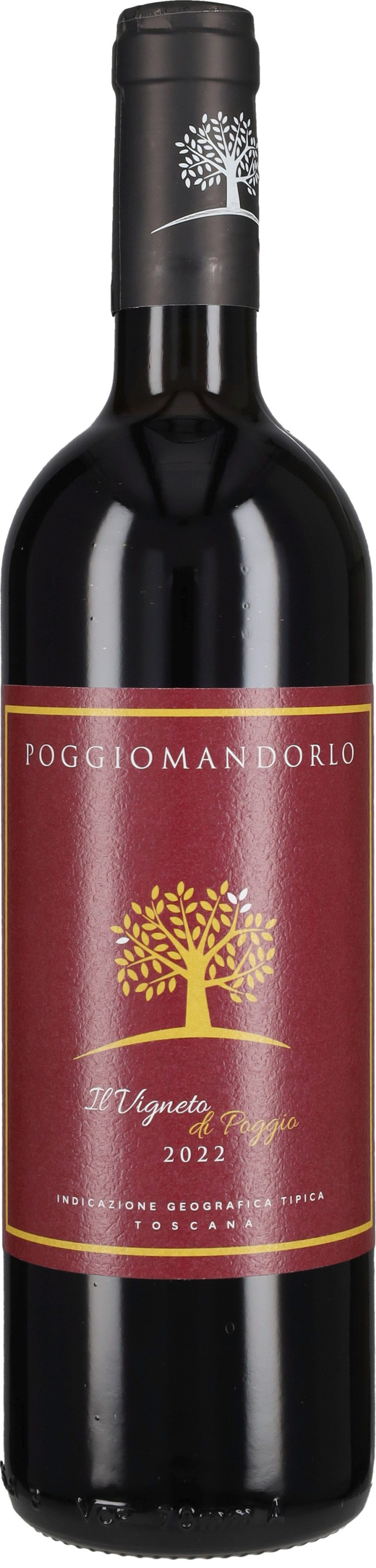
'Il Vigneto di Poggio' Poggio Mandorlo 2022“The Vineyard of Poggio” by Poggio Mandorlo is a proud expression of the rich wine landscape of Maremma. It tells the story of four friends: Roberto, Felice, Giuseppe, and Fabio, who for about twenty years have decided to experiment with the potential of a territory. Supported by the oenologist Roberto Cipresso first and then Filippo Paoletti, noted figures from the Montalcino area, they have managed to navigate the virtues of the Seggiano soils to obtain unique and never banal labels. Located at the crossroads between Val Norcia and the first hills of the Grosseto Maremma, at the foot of the Amiata volcano, the winery decides to cultivate not only Sangiovese but also rare and unique clones of Merlot and Cabernet Franc, which they import directly from Saint-Émilion in the Bordeaux region. The latest offspring of Poggio Mandorlo is precisely “the Vineyard of Poggio”, capable of expressing the versatility of the sandstone and limestone marls on which the Merlot, of which this interesting label is entirely composed, takes root. The vines were planted in 2001 and the harvest is carried out exclusively with manual selection. Fermentation takes place in stainless steel tanks at controlled temperature, during which delicate pump-overs are performed. The maceration period varies from 8 to 12 days and is meticulously monitored through chemical and sensory analysis. The 12 months of aging also take place in steel, giving us a bottle that perfectly expresses the great varietal rigor even through an international grape variety. Poggio Mandorlo with its “Vigneto di Poggio” of pure Merlot envelops us with its shining ruby veil to gift us with scents of wilted rose and wild fruit, pleasant notes of plum, underbrush, cherry, and a finish of black pepper and cinnamon. On the palate, it presents warm aromas for a full body in which the fragrance of red fruit is found, with a pleasant fresh shoulder softened by a good sapidity, the tannin is tasty and almost caressing. Poggio Mandorlo expresses all its commitment to the passion for the land and the love for good wine, reflecting in the personality of this pleasing label.12,00 £*Shipping: 48,00 £Secure redirect to the provider
-
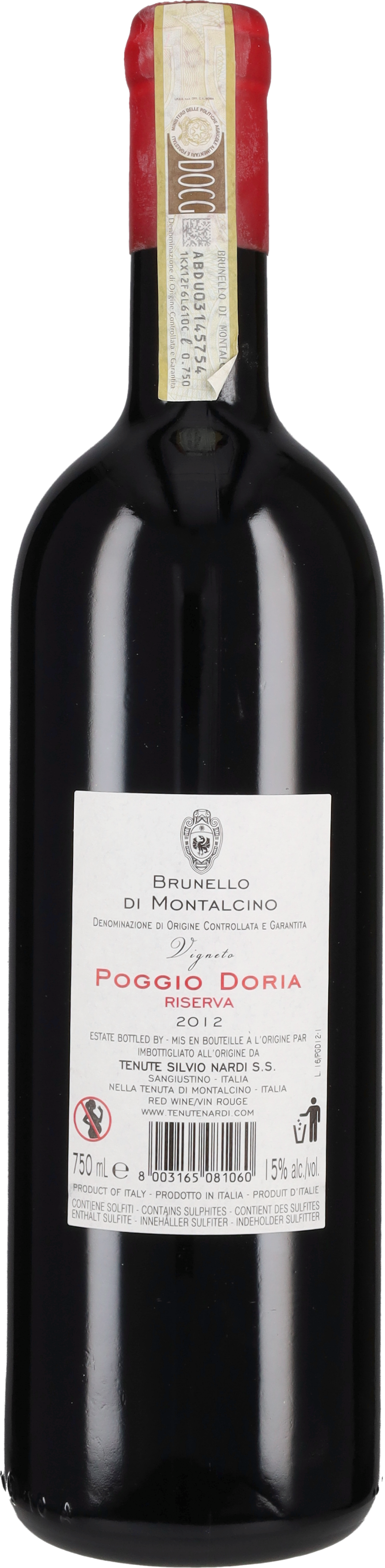
Brunello di Montalcino 'Vigneto Poggio Doria' Tenute Silvio Nardi 2012The Brunello di Montalcino Tenute Silvio Nardi ‘Vigneto Poggio Doria’ is a prestigious label capable of reflecting the elegance of Montalcino wines. The grapes destined for the Brunello ‘Vigneto Poggio Doria’ come from the Oria parcel, located on the north-western slope of Montalcino and part of the Tenuta di Casale del Bosco, the first purchased by the Nardi family. This estate dates back to the 17th century, although even in much earlier times the Etruscans practiced viticulture in the area. The ‘Vigneto Poggio Doria’ Tenute Silvio Nardi Brunello di Montalcino is a 100% Sangiovese from vines grown at an altitude of about 260 meters above sea level, on soils rich in limestone, sands, and clays, also characterized by an abundance of skeleton. After the manual harvest of the bunches, usually carried out during the second week of October, the grapes are crushed in stainless steel tanks, where alcoholic fermentation takes place at controlled temperature with 26 days of contact between the must and the skins. Once the fermentation process is completed,fermentative, the liquid is transferred into French oak tonneau from Allier, of first and second passage, for the initial aging phase of 18 months. This is followed by 12 months of maturation in large Slavonian oak barrels before bottling and further refinement in glass for as long as 36 months, aimed at bringing to market a Brunello that is already harmonious and enjoyable. The Brunello di Montalcino ‘Vigneto Poggio Doria’ by Tenute Silvio Nardi is ruby red in color with a garnet rim. The nose opens with notes of wild berries and violet, followed by mineral hints of graphite and spicy notes of nutmeg, clove, and vanilla. On the palate, it is rich, full, and harmonious, broad and enveloping, with velvety tannins that lead to a persistent and well-balanced finish.105,00 £*Shipping: 48,00 £Secure redirect to the provider
-
"""Castello di Monsanto""" """Castello di Monsanto Chianti Classico Il Poggio Riserva 1980 Red Wine - Italy""""""Sourced directly from the winery's cellar. Spring was very short in 1980 and flowering was delayed. The summer was characterized by fluctuating temperatures and a long period of dry weather. The harvest was delayed until the last week of October..."342,99 $*Shipping: 0,00 $Secure redirect to the provider
-
"""Castello di Monsanto""" """Castello di Monsanto Il Poggio Chianti Classico Gran Selezione 2020 Red Wine - Italy""""""#45 Wine Spectator Top 100 of 2025#1 Vinous Top 100 of 2025From the Chianti Classico Riserva Docg, Tuscany Region in Italy, this Chianti Classico is made from Hand picked grapes selected at the optimum moment of the vintage. Fermentation takes..."93,99 $*Shipping: 0,00 $Secure redirect to the provider
-
What did Poggio steal?
Poggio Bracciolini, an Italian scholar and scribe, is known for stealing a manuscript containing the only surviving copy of Lucretius' "De rerum natura" (On the Nature of Things) from a German monastery in the 15th century. This act of theft was significant because it led to the rediscovery and subsequent dissemination of this important work of ancient Roman poetry and philosophy, which had been lost for centuries. Poggio's theft played a crucial role in preserving and transmitting the ideas of Lucretius to future generations. **
-
What is the name of this mobile phone song Ai di di di di di di dai? I think it's a Russian song.
The song you are referring to is "Ai, Ai, Ai" by the Russian artist Polina Gagarina. It is a popular Russian pop song that gained international recognition. The catchy melody and upbeat rhythm have made it a favorite for mobile phone ringtones and music downloads. If you enjoy this song, you may also like other hits by Polina Gagarina. **
-
Is swimming allowed in Lago di Braies?
Yes, swimming is allowed in Lago di Braies. The lake is popular for swimming during the summer months, with clear and refreshing waters. However, visitors should be aware that the water can be quite cold due to its alpine location. It is important to check for any specific rules or regulations regarding swimming at the lake before visiting. **
-
What is the difference between il faut que and il faut?
"Il faut" is used to express a general necessity or obligation, while "il faut que" is used to introduce a specific action or event that is necessary or required. For example, "il faut manger" means "it is necessary to eat" in a general sense, while "il faut que tu manges" means "you need to eat" in a specific sense. "Il faut" is used to make a general statement about what is necessary, while "il faut que" is used to specify what needs to be done. **
Similar search terms for Il-Vigneto-di-Poggio
-
"""Poggio di Sotto""" """Poggio di Sotto Rosso di Montalcino 2022 Red Wine - Italy""""""From a vintage marked by heat tempered by summer rainfall that softened the impact of high temperatures, the harvest took place earlier than usual between September 2 and 16, preserving the rich and expressive character of the vineyards, and the..."122,99 $*Shipping: 0,00 $Secure redirect to the provider
-
"""Poggio di Sotto""" """Poggio di Sotto Brunello di Montalcino 2018 Red Wine - Italy""""""Parallels to the red wines of Burgundy abound in discussions of Poggio di Sotto. The Sangiovese wines released from this special property do always favor elegance and restraint over opulence and power, yet they never lack depth. Normally a paler..."299,99 $*Shipping: 0,00 $Secure redirect to the provider
-
Il Guardiano Poggio Mandorlo 2020Poggio Mandorlo presents ‘Il Guardiano’, a Supertuscan made exclusively in steel, in order to preserve the freshness and all the varietal components of the grapes at the base of the blend: Sangiovese and Merlot. We are in Toscana, at the foot of Monte Amiata, in the heart of Alta Maremma. Here, Poggio Mandorlo cultivates 12 hectares of vineyards planted with Sangiovese, Merlot, and Cabernet Franc, varieties that benefit from volcanic soils and a mild, breezy climate. The first vintage produced of this label was 2009. ‘Il Guardiano’ Poggio Mandorlo comes from a blend of Sangiovese (85%) and Merlot (15%), planted between 2001 and 2002 on soils made up of sandstone marls and limestone, at about 400 meters above sea level. Following manual harvesting and careful selection, the grapes are transferred to the winery for alcoholic fermentation in steel tanks at controlled temperature, with 16-18 days of contact between the must and the skins. The subsequent maturation period always takes place in steel for 18 months, followed by 4-6 months of refinement in bottle before its market release. To the eye, Poggio Mandorlo ‘Il Guardiano’ presents itself with a dark ruby red color. Intense and complex are the fruity and floral perceptions, accompanied by aromas of underbrush and aromatic herbs, while the tasting is soft and balanced, supported by lively freshness and moderate tannic structure. Fragrant returns of great taste-olfactory correspondence. A bottle capable of highlighting the most refreshing and pure character of this blend, to be paired with various preparations based on local meats, such as lamb stew or pappardelle with hare ragù.14,00 £*Shipping: 48,00 £Secure redirect to the provider
-
"""Poggio di Sotto""" """Poggio di Sotto Brunello di Montalcino Riserva 2019 Red Wine - Italy""""""Parallels to the red wines of Burgundy abound in discussions of Poggio di Sotto. The Sangiovese wines released from this special property do always favor elegance and restraint over opulence and power, yet they never lack depth. Normally a paler..."579,99 $*Shipping: 0,00 $Secure redirect to the provider
-
When do you use il faut and il ne faut pas?
"Il faut" is used to express what is necessary or required, while "il ne faut pas" is used to express what is not allowed or should be avoided. For example, you would use "il faut" to say "il faut étudier pour réussir" (it is necessary to study to succeed), and "il ne faut pas" to say "il ne faut pas fumer dans ce lieu" (smoking is not allowed in this place). These expressions are used to give advice, make recommendations, or set rules. **
-
Why is it souhaite-t-il and not souhaite-s-il?
In French, the pronoun "il" (he) is combined with the verb "souhaiter" (to wish) to form the phrase "souhaite-t-il" because of the rule of verb inversion in interrogative sentences. When forming a question in French, the subject pronoun and the verb are inverted, so "souhaite-t-il" follows this rule. The "t" is added to create a liaison between the verb and the pronoun, making the pronunciation smoother. **
-
What does 'Rucke di guck, Rucke di guck, Blut ist im Schuh' mean?
"Rucke di guck, Rucke di guck, Blut ist im Schuh" is a German nursery rhyme that translates to "Rock-a-bye baby, blood is in the shoe" in English. The rhyme is a traditional lullaby that tells the story of a baby being rocked to sleep while blood is found in their shoe, which is a metaphor for the baby being cared for and protected. The rhyme is meant to soothe and comfort children as they drift off to sleep. **
-
How does "il faut" work in French?
"Il faut" is a common expression in French that is used to convey the idea of necessity or obligation. It is followed by an infinitive verb and is used to express what needs to be done or what is necessary in a given situation. For example, "Il faut manger" means "It is necessary to eat." This expression is used to give advice, make suggestions, or express general truths. **
* All prices are inclusive of VAT and, if applicable, plus shipping costs. The offer information is based on the details provided by the respective shop and is updated through automated processes. Real-time updates do not occur, so deviations can occur in individual cases. ** Note: Parts of this content were created by AI.