Buy sportsincanada.com ?
We are moving the project
sportsincanada.com .
Are you interested in purchasing the domain
sportsincanada.com ?
domain@kv-gmbh.de · 0541-91531010
Buy sportsincanada.com ?
What happens to the energy when cycling?
When cycling, the body converts stored energy from food into kinetic energy to propel the bike forward. As the muscles contract and relax, they convert chemical energy into mechanical energy, which is then transferred to the pedals to turn the wheels. Some of the energy is lost as heat due to friction and air resistance, but the majority is used to propel the cyclist and the bike forward. Overall, the energy is transformed and transferred throughout the body and the bike to enable the cycling motion. **
What are the forms of energy involved in cycling?
The forms of energy involved in cycling include mechanical energy, which is the energy produced by the movement of the cyclist's muscles to pedal the bike. This mechanical energy is then converted into kinetic energy, which is the energy of motion as the bike and cyclist move forward. Additionally, potential energy is also involved, as the cyclist gains potential energy when riding uphill and then converts it back into kinetic energy when riding downhill. Finally, there is also some thermal energy produced as a result of friction between the bike's moving parts and the air resistance. **

Similar search terms for Energy
Top-Angebote
Products related to Energy:
-
ENERGY G10010 Fuel pumpVoltage [V]: 12; Fitting Position: in the fuel tank; Diameter: 39; Operating Mode: Electric; Fuel Type: Diesel; Flow rate [l/h]: 160; Supplementary Article / Supplementary Info Info 2: with filter; Weight [kg]: 0,39; Diameter 1 [mm]: 8; Diameter 2 [mm]: 22; Operating Pressure [bar]: 2; Number of inlets/outlets: 1/1; Length 1 [mm]: 80; Length 2 [mm]: 127; Always compare old and new part (in particular OE No.): ; Construction Year to: 06/2001, 11/2002, 08/2002, 11/2004; Construction Year from: 06/2000, 07/200026,99 £*Shipping: 8,45 £Secure redirect to the provider
-
ENERGY G10029 Petrol pumpVoltage [V]: 12; Fitting Position: in the fuel tank; Diameter: 50; Operating Mode: Electric; Flow rate [l/h]: 85; Injection System: Multi Point Injection (MPI); Weight [kg]: 0,68; Diameter 1 [mm]: 8; Operating Pressure [bar]: 3; Number of inlets/outlets: 1/1; Length 1 [mm]: 99; Length 2 [mm]: 136; Always compare old and new part (in particular OE No.): ; TecDoc Engine Number: 11354, 15629, 5075, 12488, 12509, 16135, 16199, 15485, 15486, 9456, 16526, 17352; Construction Year from: 05/1998, 07/1997, 11/1998; Vehicle Identification Number (VIN) from: 1-016001, 1 023 001; Vehicle Identification Number (VIN) to: 1-070000, 1-070001, 1 070 000, 1-016000; Construction Year to: 05/2002, 07/2004, 07/2002, 11/200632,99 £*Shipping: 8,45 £Secure redirect to the provider
-
ENERGY G10060 Petrol pumpVoltage [V]: 12; Fitting Position: in the fuel tank; Diameter: 43; Operating Mode: Electric; Flow rate [l/h]: 120; Injection System: Multi Point Injection (MPI); Supplementary Article / Supplementary Info Info 2: with filter; Weight [kg]: 0,54; Diameter 1 [mm]: 7; Diameter 2 [mm]: 12; Operating Pressure [bar]: 3,5; Number of inlets/outlets: 1/1; Length 1 [mm]: 96; Length 2 [mm]: 142; Always compare old and new part (in particular OE No.): ; Construction Year from: 03/1988, 01/1990, 11/1987, 03/1995, 12/199526,49 £*Shipping: 8,45 £Secure redirect to the provider
-
ENERGY G10066 Fuel pumpVoltage [V]: 12; Fitting Position: in the fuel tank; Diameter: 43; Operating Mode: Electric; Fuel Type: Petrol; Flow rate [l/h]: 120; Injection System: Multi Point Injection (MPI); Supplementary Article / Supplementary Info Info 2: with filter; Weight [kg]: 0,56; Diameter 1 [mm]: 8; Diameter 2 [mm]: 12; Operating Pressure [bar]: 3; Number of inlets/outlets: 1/1; Length 1 [mm]: 97; Length 2 [mm]: 147; Always compare old and new part (in particular OE No.): ; Vehicle Identification Number (VIN) from: P1000001, S1008893, K1000099, 11000001; Construction Year to: 02/1992, 12/1989, 02/1998, 08/2000, 12/1995, 12/1987, 06/2000, 03/1994, 08/1999, 01/2004; Construction Year from: 01/1988, 09/2000, 09/1989, 09/1994; Vehicle Identification Number (VIN) to: Y3010332, X1093313, X1166419, X1167719, Y2042870; TecDoc Engine Number: 5284, 4820, 15850; not for engine code: Z 14 XE; not for TECDOC engine number: 14923, 1304828,99 £*Shipping: 8,45 £Secure redirect to the provider


-
"Is cycling or skiing followed more?"
The popularity of cycling or skiing can vary depending on the location and time of year. In general, cycling tends to be more popular in urban areas and during the warmer months, while skiing is more popular in mountainous regions and during the winter. However, it's difficult to determine which activity is followed more overall without specific data on participation rates in different regions and seasons. **
-
What energy is needed for a swimming competition?
Swimming competitions require a combination of aerobic and anaerobic energy. Aerobic energy is needed for sustained endurance and comes from the body's oxygen supply, while anaerobic energy is used for short bursts of intense effort and comes from stored sources like glycogen. Both types of energy are necessary for swimmers to maintain their speed and power throughout the race. Additionally, proper nutrition and hydration are essential to ensure swimmers have the energy and stamina needed to perform at their best. **
-
What is the difference in energy consumption between cycling and walking?
Cycling generally requires more energy than walking due to the increased speed and effort involved in pedaling a bike. However, the exact difference in energy consumption between cycling and walking can vary depending on factors such as the individual's weight, speed, terrain, and distance traveled. In general, cycling is considered a more efficient mode of transportation in terms of energy expenditure compared to walking for covering longer distances. **
-
Rockstar Energy or Monster Energy?
The choice between Rockstar Energy and Monster Energy ultimately comes down to personal preference. Both brands offer a variety of flavors and caffeine levels to suit different tastes and energy needs. Some may prefer the bold and intense flavors of Monster Energy, while others may prefer the slightly milder taste of Rockstar Energy. It's best to try both and see which one you enjoy more. **


Isn't thermal energy kinetic energy?
Thermal energy is actually a form of internal energy within a system due to the motion of its particles. While kinetic energy is associated with the motion of an object as a whole, thermal energy is related to the random motion of particles within a substance. So, while thermal energy involves kinetic energy at the microscopic level, it is not the same as the kinetic energy of an object in motion. **
Is fusion energy nuclear energy?
Yes, fusion energy is a form of nuclear energy. Fusion occurs when two light atomic nuclei combine to form a heavier nucleus, releasing a large amount of energy in the process. This process is the same as the one that powers the sun and other stars, and it is a type of nuclear reaction. Therefore, fusion energy is a form of nuclear energy, but it differs from the nuclear fission process used in traditional nuclear power plants. **
Top-Angebote
Products related to Energy:
-
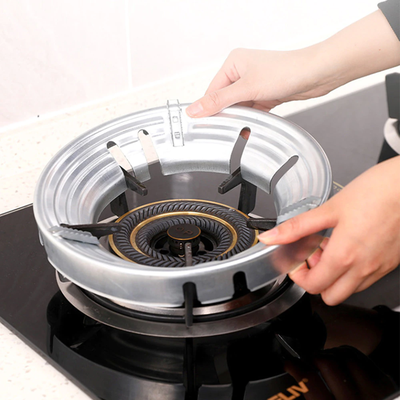
KitchenCuration Gas Stove Energy Saving Ring Gas Stove Energy Saving RingDo you struggle with unevenly cooked food due to uneven flames from your stove It's frustrating, isn't it But with this gas stove energysaving ring, you can ensure that the flames are distributed evenly and reach every part of your utensils. Here...22,97 $*Shipping: 0,00 $Secure redirect to the provider
-
ENERGY G10005 Petrol pumpVoltage [V]: 12; Fitting Position: in the fuel tank; Diameter: 36; Operating Mode: Electric; Flow rate [l/h]: 90; Injection System: Multi Point Injection (MPI); Supplementary Article / Supplementary Info Info 2: with filter; Weight [kg]: 0,32; Diameter 1 [mm]: 6; Diameter 2 [mm]: 10; Operating Pressure [bar]: 3; Number of inlets/outlets: 2/1; Length 1 [mm]: 65; Length 2 [mm]: 175; Always compare old and new part (in particular OE No.): ; TecDoc Engine Number: 14730; Construction Year from: 05/1997, 10/1995, 02/1996, 06/2000, 03/1996, 01/2001, 03/1998, 09/1997, 06/1996, 03/1999, 02/2000, 10/2001; not for engine code: KDX (TU3MC), B 4184 S3; Construction Year to: 12/1998, 12/1997, 10/1999, 03/2003, 07/1999, 09/1999, 08/2001, 09/200117,99 £*Shipping: 8,45 £Secure redirect to the provider
-
ENERGY G10010 Fuel pumpVoltage [V]: 12; Fitting Position: in the fuel tank; Diameter: 39; Operating Mode: Electric; Fuel Type: Diesel; Flow rate [l/h]: 160; Supplementary Article / Supplementary Info Info 2: with filter; Weight [kg]: 0,39; Diameter 1 [mm]: 8; Diameter 2 [mm]: 22; Operating Pressure [bar]: 2; Number of inlets/outlets: 1/1; Length 1 [mm]: 80; Length 2 [mm]: 127; Always compare old and new part (in particular OE No.): ; Construction Year to: 06/2001, 11/2002, 08/2002, 11/2004; Construction Year from: 06/2000, 07/200026,99 £*Shipping: 8,45 £Secure redirect to the provider
-
ENERGY G10029 Petrol pumpVoltage [V]: 12; Fitting Position: in the fuel tank; Diameter: 50; Operating Mode: Electric; Flow rate [l/h]: 85; Injection System: Multi Point Injection (MPI); Weight [kg]: 0,68; Diameter 1 [mm]: 8; Operating Pressure [bar]: 3; Number of inlets/outlets: 1/1; Length 1 [mm]: 99; Length 2 [mm]: 136; Always compare old and new part (in particular OE No.): ; TecDoc Engine Number: 11354, 15629, 5075, 12488, 12509, 16135, 16199, 15485, 15486, 9456, 16526, 17352; Construction Year from: 05/1998, 07/1997, 11/1998; Vehicle Identification Number (VIN) from: 1-016001, 1 023 001; Vehicle Identification Number (VIN) to: 1-070000, 1-070001, 1 070 000, 1-016000; Construction Year to: 05/2002, 07/2004, 07/2002, 11/200632,99 £*Shipping: 8,45 £Secure redirect to the provider
-
What happens to the energy when cycling?
When cycling, the body converts stored energy from food into kinetic energy to propel the bike forward. As the muscles contract and relax, they convert chemical energy into mechanical energy, which is then transferred to the pedals to turn the wheels. Some of the energy is lost as heat due to friction and air resistance, but the majority is used to propel the cyclist and the bike forward. Overall, the energy is transformed and transferred throughout the body and the bike to enable the cycling motion. **
-
What are the forms of energy involved in cycling?
The forms of energy involved in cycling include mechanical energy, which is the energy produced by the movement of the cyclist's muscles to pedal the bike. This mechanical energy is then converted into kinetic energy, which is the energy of motion as the bike and cyclist move forward. Additionally, potential energy is also involved, as the cyclist gains potential energy when riding uphill and then converts it back into kinetic energy when riding downhill. Finally, there is also some thermal energy produced as a result of friction between the bike's moving parts and the air resistance. **
-
"Is cycling or skiing followed more?"
The popularity of cycling or skiing can vary depending on the location and time of year. In general, cycling tends to be more popular in urban areas and during the warmer months, while skiing is more popular in mountainous regions and during the winter. However, it's difficult to determine which activity is followed more overall without specific data on participation rates in different regions and seasons. **
-
What energy is needed for a swimming competition?
Swimming competitions require a combination of aerobic and anaerobic energy. Aerobic energy is needed for sustained endurance and comes from the body's oxygen supply, while anaerobic energy is used for short bursts of intense effort and comes from stored sources like glycogen. Both types of energy are necessary for swimmers to maintain their speed and power throughout the race. Additionally, proper nutrition and hydration are essential to ensure swimmers have the energy and stamina needed to perform at their best. **
Similar search terms for Energy
-
ENERGY G10060 Petrol pumpVoltage [V]: 12; Fitting Position: in the fuel tank; Diameter: 43; Operating Mode: Electric; Flow rate [l/h]: 120; Injection System: Multi Point Injection (MPI); Supplementary Article / Supplementary Info Info 2: with filter; Weight [kg]: 0,54; Diameter 1 [mm]: 7; Diameter 2 [mm]: 12; Operating Pressure [bar]: 3,5; Number of inlets/outlets: 1/1; Length 1 [mm]: 96; Length 2 [mm]: 142; Always compare old and new part (in particular OE No.): ; Construction Year from: 03/1988, 01/1990, 11/1987, 03/1995, 12/199526,49 £*Shipping: 8,45 £Secure redirect to the provider
-
ENERGY G10066 Fuel pumpVoltage [V]: 12; Fitting Position: in the fuel tank; Diameter: 43; Operating Mode: Electric; Fuel Type: Petrol; Flow rate [l/h]: 120; Injection System: Multi Point Injection (MPI); Supplementary Article / Supplementary Info Info 2: with filter; Weight [kg]: 0,56; Diameter 1 [mm]: 8; Diameter 2 [mm]: 12; Operating Pressure [bar]: 3; Number of inlets/outlets: 1/1; Length 1 [mm]: 97; Length 2 [mm]: 147; Always compare old and new part (in particular OE No.): ; Vehicle Identification Number (VIN) from: P1000001, S1008893, K1000099, 11000001; Construction Year to: 02/1992, 12/1989, 02/1998, 08/2000, 12/1995, 12/1987, 06/2000, 03/1994, 08/1999, 01/2004; Construction Year from: 01/1988, 09/2000, 09/1989, 09/1994; Vehicle Identification Number (VIN) to: Y3010332, X1093313, X1166419, X1167719, Y2042870; TecDoc Engine Number: 5284, 4820, 15850; not for engine code: Z 14 XE; not for TECDOC engine number: 14923, 1304828,99 £*Shipping: 8,45 £Secure redirect to the provider
-
ENERGY G20031 Petrol pumpVoltage [V]: 12; Fitting Position: Fuel Line; Diameter: 43; Operating Mode: Electric; Flow rate [l/h]: 95; Injection System: Multi Point Injection (MPI); Weight [kg]: 0,55; Diameter 1 [mm]: 9; Diameter 2 [mm]: 12; Operating Pressure [bar]: 3; Number of inlets/outlets: 1/1; Length 1 [mm]: 110; Length 2 [mm]: 170; Always compare old and new part (in particular OE No.): ; TecDoc Engine Number: 93, 120, 110, 2864; Construction Year from: 09/1991, 07/1989, 07/1990, 06/1990; Construction Year to: 03/1992, 04/1988, 09/1990, 12/199231,99 £*Shipping: 8,45 £Secure redirect to the provider
-
ENERGY G20036 Petrol pumpVoltage [V]: 12; Fitting Position: Fuel Line; Diameter: 43; Operating Mode: Electric; Fuel Type: Petrol; Flow rate [l/h]: 90; Injection System: Multi Point Injection (MPI); Weight [kg]: 0,77; Diameter 1 [mm]: 8; Operating Pressure [bar]: 4; Number of inlets/outlets: 2/1; Length 1 [mm]: 135; Length 2 [mm]: 197; Always compare old and new part (in particular OE No.): ; Construction Year to: 12/1996; Vehicle Identification Number (VIN) from: A01571771,99 £*Shipping: 8,45 £Secure redirect to the provider
-
What is the difference in energy consumption between cycling and walking?
Cycling generally requires more energy than walking due to the increased speed and effort involved in pedaling a bike. However, the exact difference in energy consumption between cycling and walking can vary depending on factors such as the individual's weight, speed, terrain, and distance traveled. In general, cycling is considered a more efficient mode of transportation in terms of energy expenditure compared to walking for covering longer distances. **
-
Rockstar Energy or Monster Energy?
The choice between Rockstar Energy and Monster Energy ultimately comes down to personal preference. Both brands offer a variety of flavors and caffeine levels to suit different tastes and energy needs. Some may prefer the bold and intense flavors of Monster Energy, while others may prefer the slightly milder taste of Rockstar Energy. It's best to try both and see which one you enjoy more. **
-
Isn't thermal energy kinetic energy?
Thermal energy is actually a form of internal energy within a system due to the motion of its particles. While kinetic energy is associated with the motion of an object as a whole, thermal energy is related to the random motion of particles within a substance. So, while thermal energy involves kinetic energy at the microscopic level, it is not the same as the kinetic energy of an object in motion. **
-
Is fusion energy nuclear energy?
Yes, fusion energy is a form of nuclear energy. Fusion occurs when two light atomic nuclei combine to form a heavier nucleus, releasing a large amount of energy in the process. This process is the same as the one that powers the sun and other stars, and it is a type of nuclear reaction. Therefore, fusion energy is a form of nuclear energy, but it differs from the nuclear fission process used in traditional nuclear power plants. **
* All prices are inclusive of VAT and, if applicable, plus shipping costs. The offer information is based on the details provided by the respective shop and is updated through automated processes. Real-time updates do not occur, so deviations can occur in individual cases. ** Note: Parts of this content were created by AI.