Buy sportsincanada.com ?
We are moving the project
sportsincanada.com .
Are you interested in purchasing the domain
sportsincanada.com ?
domain@kv-gmbh.de · 0541-91531010
Buy sportsincanada.com ?
What happens to the algae during the cycling phase?
During the cycling phase of an aquarium, the algae population may experience fluctuations. Initially, there may be an increase in algae growth due to excess nutrients in the water. As the aquarium stabilizes and beneficial bacteria establish themselves, the algae population may decrease as competition for nutrients increases. Overall, the cycling phase helps establish a balance in the aquarium ecosystem, leading to a more stable environment for fish and other aquatic life. **
Are thread algae bad during the initial cycling phase?
Thread algae, also known as hair algae, can be a common occurrence during the initial cycling phase of an aquarium. While it may not necessarily be "bad" during this phase, it can indicate an imbalance in the tank's ecosystem. Excessive thread algae can compete with other plants for nutrients and light, potentially hindering the growth of beneficial plants. It's important to monitor and manage the presence of thread algae during the initial cycling phase to ensure a healthy and balanced aquarium environment. **
Similar search terms for Algamar-Instant-Algae
Top-Angebote
Products related to Algamar-Instant-Algae:
-
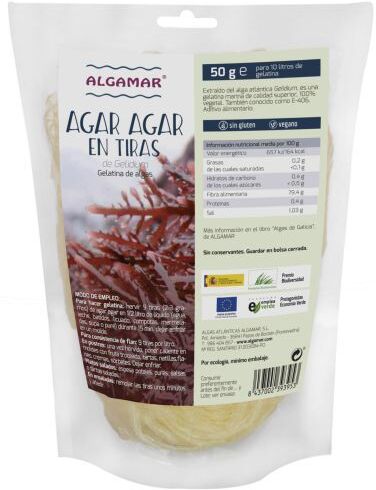
Algamar Agar Strips 50grNutrition and Supplements Prepared Dishes and Preserves Algamar Agar Strips 50gr It's the highest quality marine gelatin. This soluble fibre extracted from the algae Gelidium sesquipedale, has a neutral taste. Because of its great purity it is also used in research (microbiology). 100% vegetable. Satisfying and low in calories. How can we consume it? - To make gelatin: Boil 9 strips (about 2-3 grams) per 1/2 liter of liquid (water, milk, shakes, smoothie, compotes, jams, soup or puree) for 15 min. Let cool in a mold. - For custard consistency: 9 strips per one litre. Let it cool down. - In desserts: once boiled, put hot in molds with chopped fruit, cakes, custards, custards, creams, sorbets. Let it cool down. - Salted dishes: thick stews, purees, sauces or salted cakes. - In salads: soak the strips for a few minutes and add.3,61 £*Shipping: 4,99 £Secure redirect to the provider
-
Algamar Agar Flakes 50grNutrition and Supplements Prepared Dishes and Preserves Algamar Agar Flakes 50gr It's the highest quality marine gelatin. This soluble fibre extracted from the algae Gelidium sesquipedale, has a neutral taste. Because of its great purity it is also used in research (microbiology). 100% vegetable. Satisfying and low in calories. How can we consume it? - To make gelatin: Boil 9 strips (about 2-3 grams) per 1/2 liter of liquid (water, milk, shakes, smoothie, compotes, jams, soup or puree) for 15 min. Let cool in a mold. - For custard consistency: 9 strips per one litre. Let it cool down. - In desserts: once boiled, put hot in molds with chopped fruit, cakes, custards, custards, creams, sorbets. Let it cool down. - Salted dishes: thick stews, purees, sauces or salted cakes. - In salads: soak the strips for a few minutes and add.4,44 £*Shipping: 3,99 £Secure redirect to the provider
-
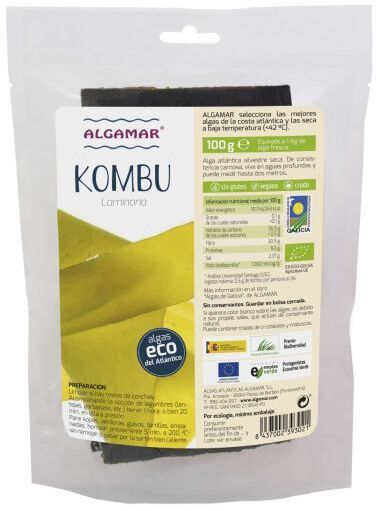
Algamar Kombu seaweed 100 grNutrition and Supplements Prepared Dishes and Preserves Algamar Kombu seaweed 100 gr Large in size and brown in colour, it lives at an average depth of 12 m. Especially rich in alginic acid, it has a meaty consistency and is used in cooking for flavour or as a vegetable. Its glutamic acid softens the vegetables. It produces a satiating effect and is rich in minerals, especially calcium and magnesium. How can we consume it? - Oven: Bake for 5 minutes at 200C without soaking, or pass through a very hot pan. For soups, vegetables, stews, tortillas, empanadas. - Cooked: 20 minutes in a pressure cooker or in boiling water 1 hour, together with the vegetables (lentils, chickpeas, etc) - Clean if there are traces of shells4,23 £*Shipping: 4,99 £Secure redirect to the provider
-
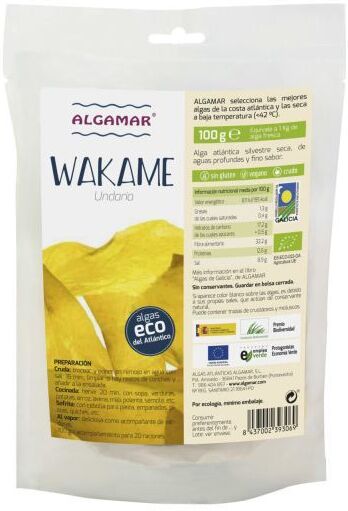
Algamar Wakame seaweed 100 grNutrition and Supplements Prepared Dishes and Preserves Algamar Wakame seaweed 100 gr Like a giant oak leaf, it grows on the coasts of Galicia and can measure 1.5 m. Rich in calcium, iodine, proteins and fibre, it is one of the most appropriate for eating raw in salads, and for starting to cook with seaweed, due to its great versatility: in soups, rice, with other vegetables, in the oven, simply boiled, in empanadas fillings, etc. Wild Atlantic seaweed, deep water and fine taste. Rich in highly digestible proteins, mineral salts (exceptional contribution of calcium), magnesium, phosphorus, iodine and fiber. How can we consume it? - Raw: Chop and soak for 15 minutes, clean if there are shells and add to the salad. - Cooked: Boil for 20 minutes with soup, vegetables, potatoes, rice, oats, millet, polenta, semolina, etc. - Sofrita: With onions for pasta, empanadas, pizzas, quiches, etc. - Steamed: Delicious as an accompaniment to vegetables.6,26 £*Shipping: 3,99 £Secure redirect to the provider

-
Are algae prokaryotes?
No, algae are not prokaryotes. Algae are a diverse group of photosynthetic organisms that can be found in various environments, including freshwater and marine habitats. They are eukaryotic organisms, meaning they have a true nucleus and other membrane-bound organelles within their cells. This distinguishes them from prokaryotes, which lack a true nucleus and membrane-bound organelles. **
-
What are algae?
Algae are a diverse group of photosynthetic organisms that can be found in various aquatic environments such as oceans, lakes, and rivers. They can range in size from microscopic single-celled organisms to large multicellular seaweeds. Algae play a crucial role in the ecosystem as they are primary producers, converting sunlight into energy through photosynthesis. Additionally, algae are an important food source for many aquatic organisms and are also used by humans in various industries such as food, pharmaceuticals, and biofuels. **
-
Are shells algae?
Shells are not algae. Shells are the hard outer coverings of certain animals, such as mollusks, that are made of calcium carbonate. Algae, on the other hand, are a diverse group of photosynthetic organisms that can range from single-celled to multicellular forms. Algae are not animals and do not produce shells. **
-
Are algae vegan?
Yes, algae is considered vegan. Algae is a plant-based organism that does not have a central nervous system or the ability to feel pain, making it suitable for a vegan diet. Algae is also a rich source of nutrients and can be used in a variety of vegan-friendly foods and supplements. **

Does spirulina or chlorella algae powder taste like nori algae?
Spirulina and chlorella algae powder have a different taste compared to nori algae. Spirulina has a slightly earthy and grassy flavor, while chlorella has a more intense, slightly bitter taste. Nori algae, on the other hand, has a distinct umami flavor with a hint of sweetness. Each type of algae powder has its own unique taste profile, and they may not necessarily taste like nori algae. **
Can algae have roots?
No, algae do not have roots. Algae are simple, plant-like organisms that lack roots, stems, and leaves. Instead, they typically anchor themselves using holdfasts, which are specialized structures that help them attach to surfaces like rocks or other substrates. Algae absorb nutrients directly from their surroundings through their cell walls, rather than through a root system. **
Top-Angebote
Products related to Algamar-Instant-Algae:
-
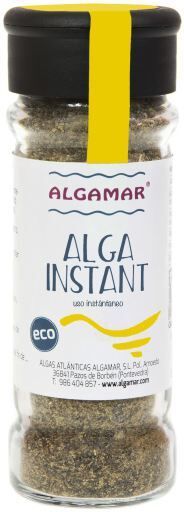
Algamar Instant AlgaeNutrition and Supplements Sauces and Condiments Algamar Instant Algae Powdered Algae Seasoning for instant use. Easy, nutritious and tasty. No added salt. Spaghetti Seaweed and spices. The Sea Spaghetti seaweed is very rich in mineral salts, especially iron. How can we consume it? - Sprinkle half a teaspoon of "Alga Instant" on the rice dish, salad, soup, vegetables, stews, potatoes3,58 £*Shipping: 3,99 £Secure redirect to the provider
-
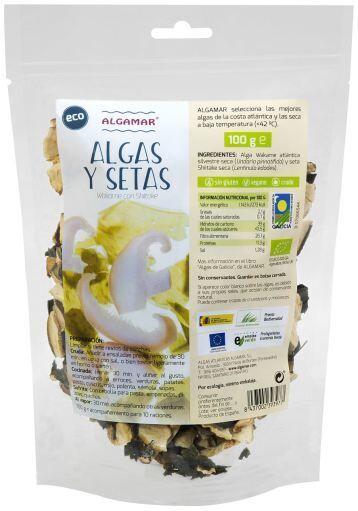
Algamar Algae and Mushrooms 100grNutrition and Supplements Prepared Dishes and Preserves Algamar Algae and Mushrooms 100gr Wild Atlantic Wakame algae (Undaria pinnatifida) and Shiitake mushroom (Lentinula edodes) How can we consume it? - Raw: add to salads after soaking for 20 minutes, or lightly toast in the oven or frying pan. - Cooked: boil for 20 minutes and season to taste, accompanying rice, vegetables, potatoes, pasta, couscous, millet, polenta, semolina, soups. - Sofrita: with onions for pasta, empanadas, pizzas, quiches. - Steamed: 20 minutes with other vegetables.8,16 £*Shipping: 3,99 £Secure redirect to the provider
-
Algamar Agar Strips 50grNutrition and Supplements Prepared Dishes and Preserves Algamar Agar Strips 50gr It's the highest quality marine gelatin. This soluble fibre extracted from the algae Gelidium sesquipedale, has a neutral taste. Because of its great purity it is also used in research (microbiology). 100% vegetable. Satisfying and low in calories. How can we consume it? - To make gelatin: Boil 9 strips (about 2-3 grams) per 1/2 liter of liquid (water, milk, shakes, smoothie, compotes, jams, soup or puree) for 15 min. Let cool in a mold. - For custard consistency: 9 strips per one litre. Let it cool down. - In desserts: once boiled, put hot in molds with chopped fruit, cakes, custards, custards, creams, sorbets. Let it cool down. - Salted dishes: thick stews, purees, sauces or salted cakes. - In salads: soak the strips for a few minutes and add.3,61 £*Shipping: 4,99 £Secure redirect to the provider
-
Algamar Agar Flakes 50grNutrition and Supplements Prepared Dishes and Preserves Algamar Agar Flakes 50gr It's the highest quality marine gelatin. This soluble fibre extracted from the algae Gelidium sesquipedale, has a neutral taste. Because of its great purity it is also used in research (microbiology). 100% vegetable. Satisfying and low in calories. How can we consume it? - To make gelatin: Boil 9 strips (about 2-3 grams) per 1/2 liter of liquid (water, milk, shakes, smoothie, compotes, jams, soup or puree) for 15 min. Let cool in a mold. - For custard consistency: 9 strips per one litre. Let it cool down. - In desserts: once boiled, put hot in molds with chopped fruit, cakes, custards, custards, creams, sorbets. Let it cool down. - Salted dishes: thick stews, purees, sauces or salted cakes. - In salads: soak the strips for a few minutes and add.4,44 £*Shipping: 3,99 £Secure redirect to the provider
-
What happens to the algae during the cycling phase?
During the cycling phase of an aquarium, the algae population may experience fluctuations. Initially, there may be an increase in algae growth due to excess nutrients in the water. As the aquarium stabilizes and beneficial bacteria establish themselves, the algae population may decrease as competition for nutrients increases. Overall, the cycling phase helps establish a balance in the aquarium ecosystem, leading to a more stable environment for fish and other aquatic life. **
-
Are thread algae bad during the initial cycling phase?
Thread algae, also known as hair algae, can be a common occurrence during the initial cycling phase of an aquarium. While it may not necessarily be "bad" during this phase, it can indicate an imbalance in the tank's ecosystem. Excessive thread algae can compete with other plants for nutrients and light, potentially hindering the growth of beneficial plants. It's important to monitor and manage the presence of thread algae during the initial cycling phase to ensure a healthy and balanced aquarium environment. **
-
Are algae prokaryotes?
No, algae are not prokaryotes. Algae are a diverse group of photosynthetic organisms that can be found in various environments, including freshwater and marine habitats. They are eukaryotic organisms, meaning they have a true nucleus and other membrane-bound organelles within their cells. This distinguishes them from prokaryotes, which lack a true nucleus and membrane-bound organelles. **
-
What are algae?
Algae are a diverse group of photosynthetic organisms that can be found in various aquatic environments such as oceans, lakes, and rivers. They can range in size from microscopic single-celled organisms to large multicellular seaweeds. Algae play a crucial role in the ecosystem as they are primary producers, converting sunlight into energy through photosynthesis. Additionally, algae are an important food source for many aquatic organisms and are also used by humans in various industries such as food, pharmaceuticals, and biofuels. **
Similar search terms for Algamar-Instant-Algae
-
Algamar Kombu seaweed 100 grNutrition and Supplements Prepared Dishes and Preserves Algamar Kombu seaweed 100 gr Large in size and brown in colour, it lives at an average depth of 12 m. Especially rich in alginic acid, it has a meaty consistency and is used in cooking for flavour or as a vegetable. Its glutamic acid softens the vegetables. It produces a satiating effect and is rich in minerals, especially calcium and magnesium. How can we consume it? - Oven: Bake for 5 minutes at 200C without soaking, or pass through a very hot pan. For soups, vegetables, stews, tortillas, empanadas. - Cooked: 20 minutes in a pressure cooker or in boiling water 1 hour, together with the vegetables (lentils, chickpeas, etc) - Clean if there are traces of shells4,23 £*Shipping: 4,99 £Secure redirect to the provider
-
Algamar Wakame seaweed 100 grNutrition and Supplements Prepared Dishes and Preserves Algamar Wakame seaweed 100 gr Like a giant oak leaf, it grows on the coasts of Galicia and can measure 1.5 m. Rich in calcium, iodine, proteins and fibre, it is one of the most appropriate for eating raw in salads, and for starting to cook with seaweed, due to its great versatility: in soups, rice, with other vegetables, in the oven, simply boiled, in empanadas fillings, etc. Wild Atlantic seaweed, deep water and fine taste. Rich in highly digestible proteins, mineral salts (exceptional contribution of calcium), magnesium, phosphorus, iodine and fiber. How can we consume it? - Raw: Chop and soak for 15 minutes, clean if there are shells and add to the salad. - Cooked: Boil for 20 minutes with soup, vegetables, potatoes, rice, oats, millet, polenta, semolina, etc. - Sofrita: With onions for pasta, empanadas, pizzas, quiches, etc. - Steamed: Delicious as an accompaniment to vegetables.6,26 £*Shipping: 3,99 £Secure redirect to the provider
-
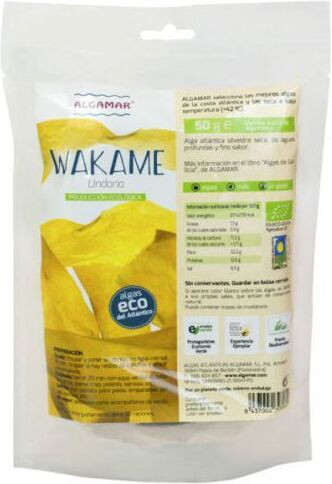
Algamar Wakame seaweed 50 grNutrition and Supplements Prepared Dishes and Preserves Algamar Wakame seaweed 50 gr Like a giant oak leaf, it grows on the coasts of Galicia and can measure 1.5 m. Rich in calcium, iodine, proteins and fibre, it is one of the most appropriate for eating raw in salads, and for starting to cook with seaweed, due to its great versatility: in soups, rice, with other vegetables, in the oven, simply boiled, in empanadas fillings, etc. Wild Atlantic seaweed, deep water and fine taste. Rich in highly digestible proteins, mineral salts (exceptional contribution of calcium), magnesium, phosphorus, iodine and fiber. How can we consume it? - Raw: Chop and soak for 15 minutes, clean if there are shells and add to the salad. - Cooked: Boil for 20 minutes with soup, vegetables, potatoes, rice, oats, millet, polenta, semolina, etc. - Sofrita: With onions for pasta, empanadas, pizzas, quiches, etc. - Steamed: Delicious as an accompaniment to vegetables.4,43 £*Shipping: 3,99 £Secure redirect to the provider
-
Algamar Kombu seaweed 50 grNutrition and Supplements Prepared Dishes and Preserves Algamar Kombu seaweed 50 gr Large in size and brown in colour, it lives at an average depth of 12 m. Especially rich in alginic acid, it has a meaty consistency and is used in cooking for flavour or as a vegetable. Its glutamic acid softens the vegetables. It produces a satiating effect and is rich in minerals, especially calcium and magnesium. How can we consume it? - Oven: Bake for 5 minutes at 200C without soaking, or pass through a very hot pan. For soups, vegetables, stews, tortillas, empanadas. - Cooked: 20 minutes in a pressure cooker or in boiling water 1 hour, together with the vegetables (lentils, chickpeas, etc) - Clean if there are traces of shells3,32 £*Shipping: 3,99 £Secure redirect to the provider
-
Are shells algae?
Shells are not algae. Shells are the hard outer coverings of certain animals, such as mollusks, that are made of calcium carbonate. Algae, on the other hand, are a diverse group of photosynthetic organisms that can range from single-celled to multicellular forms. Algae are not animals and do not produce shells. **
-
Are algae vegan?
Yes, algae is considered vegan. Algae is a plant-based organism that does not have a central nervous system or the ability to feel pain, making it suitable for a vegan diet. Algae is also a rich source of nutrients and can be used in a variety of vegan-friendly foods and supplements. **
-
Does spirulina or chlorella algae powder taste like nori algae?
Spirulina and chlorella algae powder have a different taste compared to nori algae. Spirulina has a slightly earthy and grassy flavor, while chlorella has a more intense, slightly bitter taste. Nori algae, on the other hand, has a distinct umami flavor with a hint of sweetness. Each type of algae powder has its own unique taste profile, and they may not necessarily taste like nori algae. **
-
Can algae have roots?
No, algae do not have roots. Algae are simple, plant-like organisms that lack roots, stems, and leaves. Instead, they typically anchor themselves using holdfasts, which are specialized structures that help them attach to surfaces like rocks or other substrates. Algae absorb nutrients directly from their surroundings through their cell walls, rather than through a root system. **
* All prices are inclusive of VAT and, if applicable, plus shipping costs. The offer information is based on the details provided by the respective shop and is updated through automated processes. Real-time updates do not occur, so deviations can occur in individual cases. ** Note: Parts of this content were created by AI.